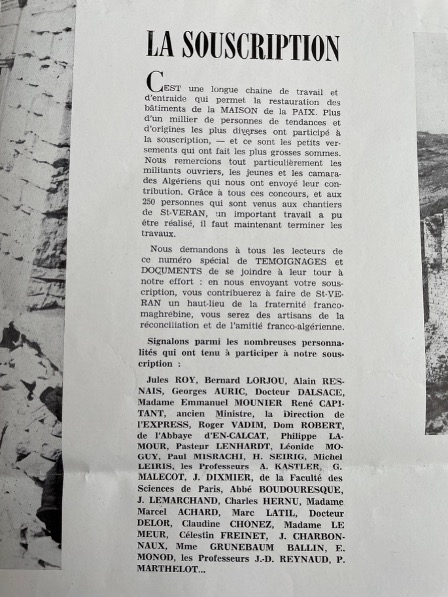
Quand il reprend le moulinage en 1968, Maurice Pagat, pour assurer sa restauration « en hommage aux ouvrières ardéchoises », décide d’organiser un Centre International de Jeunes et lance en février 1969 un appel dans un supplément de Témoignages et Documents, aux bonnes volontés et aux dons pour réaliser le chantier de restauration à Pâques et du 20 juin au 20 septembre (voir annexe n°10).
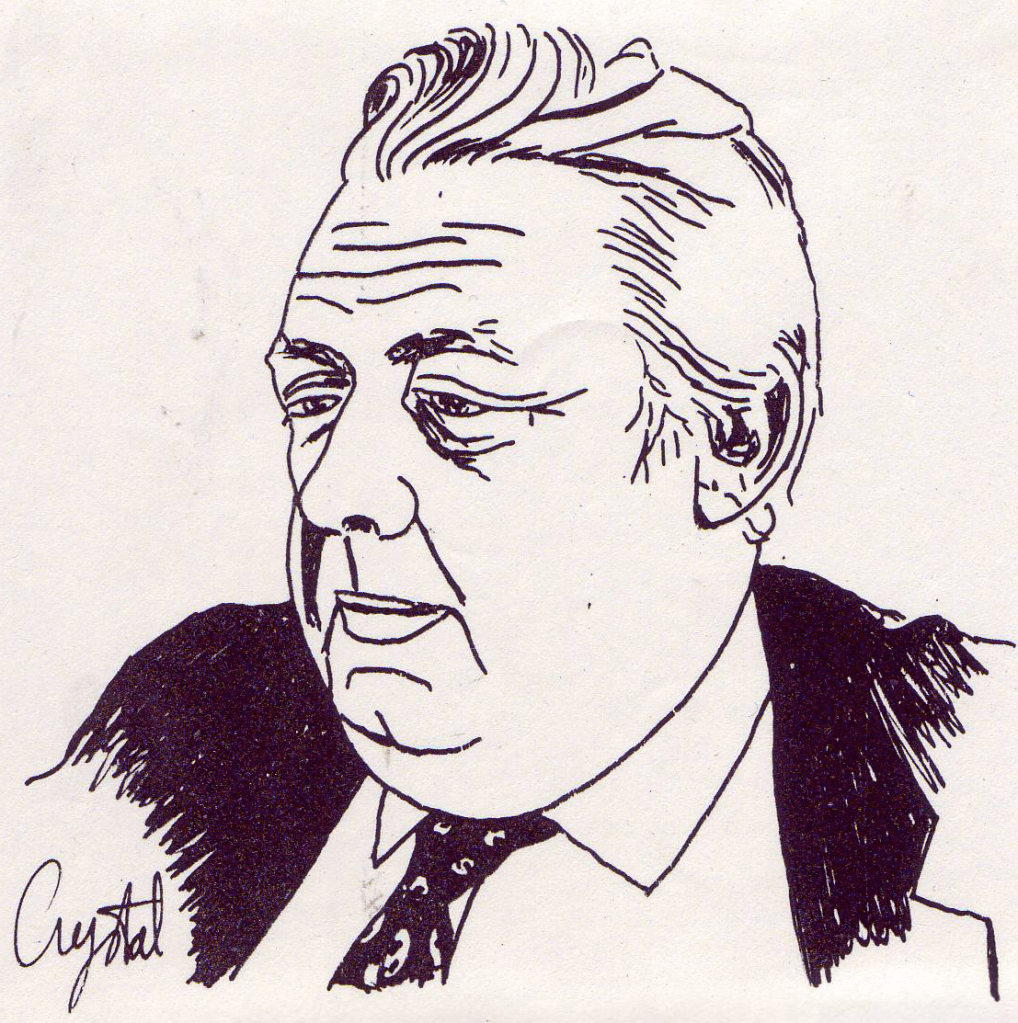
Maurice Pagat a alors 40 ans. Né en 1929 à Saint Etienne et mort en 2009, il sera une figure du catholicisme social et de l’anarchosyndicalisme. Il créera le syndicat des chômeurs dans les années 1980 (on trouve sur lui de nombreux articles dans différents journaux et revues dont Le Monde[1] et La Croix. Voir annexe 11.). Dans les années 1960, Maurice Pagat dirige la revue Témoignages et Documents fondée par le Comité Audin pour lutter contre la guerre en Algérie et dénoncer les actes de torture (il a été licencié par EDF pour cet engagement). A la lecture des noms des personnes qui ont participé à la souscription pour la restauration de la maison de la paix (بيت السلام), on constate que Maurice Pagat devait avoir un vrai talent de conviction et d’entraînement : on y trouve deux ministres, la direction de la rédaction de l’Express (alors dirigé par JJSS, partisan de la décolonisation), Roger Vadim, Jules Roy, Alain Resnais, etc.
Mais revenons à la Chèze. A la fin des années 60, l’urgence est double : alléger la toiture dont le poids, en raison notamment de la conception de la charpente en ferme inversée, fait s’écarter les murs en partie haute et trouver une solution pour les planchers qui s’affaissent. Selon Hervé Tesson, « on voyait à certains endroits le jour à travers les murs ».
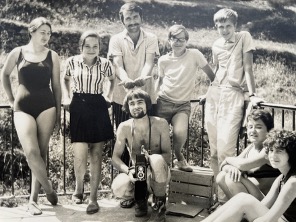
Sur cette photo quelques-uns des étudiants qui répondent à son appel. Au milieu en haut un étudiant Turc kurde[2], Negati Suer. Si certains quittent rapidement le chantier en se demandant où ils sont tombés, d’autres passent sous le charme du moulinage et de la région.
Au centre de la photo, Hervé Tesson (l’homme avec un appareil photo), a travaillé sur des chantiers organisés par l’association R.E.M.P.A.R.T et à Saint Véran avec Maurice Pagat (voir annexe 12.).
Marie-Joëlle Tesson (deuxième plan sur la droite) et Pascal Tesson (frère de Hervé), qui ont alors 26 ans et qui viennent de racheter le moulinage, participent également aux travaux.
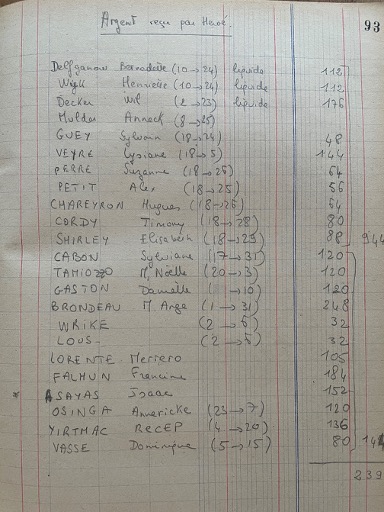
Marie-Joëlle, à la suite de Gabriel Riou, réutilise le registre des années 50 pour tenir les comptes du Centre. C’est ainsi que l’on sait que 26 jeunes, dont 2 via REMPART, venus de nombreux pays européens mais aussi des USA (au moins deux[3]) ont participé au chantier.
Sur la photo N&B, en bas à droite, Amy Untermyer (aujourd’hui Likover), Américaine, fille de Frank Untermyer, professeur à l’Université Roosevelt[4]. Elle était alors étudiante à la University of Wisconsin-Milwaukee et habite aujourd’hui San Rafael en Californie. Elle est membre de l’association San Rafael Heritage, affiliée au National Trust for Historic Preservation[5]. This Place Matters – TPM –(voir photo) est une campagne nationale annuelle de sensibilisation à la préservation des sites historiques (création antérieure à celle du mouvement Black Lives Matter – BLM –). Aujourd’hui à la retraite, elle était professeur de Français et d’Espagnol. Nous avons son témoigne sur le camp en annexe 14. Elle est sur la photo avec le panneau ‘Historic Building in Jeopardy’. Extrait : ‘I didn’t really understand what Pascal and Marie-Joëlle intended to do with the mill. Now I do.’
Si certains s’amusent un peu à la provocation (en mettant par exemple un drapeau rouge sur le barrage, ce qui provoquera l’arrivée des gendarmes et la suspicion des habitants de Dornas), les travaux avancent bien et contribuent au sauvetage du moulinage de la Chèze.
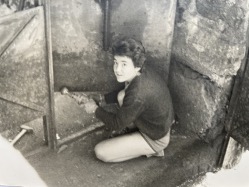
| Marie-Joëlle Tesson entretenant une vanne d’accès au canal. |
Depuis cette date, les travaux réguliers d’entretien réalisés chaque année par Pascal Tesson (ses enfants ont été mis à contribution) ont permis au moulinage de traverser le temps jusqu’à aujourd’hui. Les joints ont été refaits. Par ailleurs il a fallu lutter contre les champignons via notamment des travaux permettant une meilleure ventilation des bâtiments.
Il est important de souligner ici, sans jugement de valeur par rapport à d’autres choix qui auraient pu être faits, que l’essentiel des travaux réalisés après l’arrêt du moulinage l’ont été à des fins de préservation.
Témoignage de Amy Likover
- How did you know that there was a work camp there?
I was placed in the work camp by an American group led by Mrs. Estelle Rothschild Roddy, « Adventures in French. » Mrs. Roddy worked out of the East Coast and had an office in Paris on the Place de l’Odéon, across from the Hôtel de l’Odéon. Mrs. Roddy’s program consisted of a choice of a French immersion family program which I did in 1968 (1 week in Paris, 1 month in Lorraine, 1 month in Bretagne) or a summer work + travel outside France program, which I chose in 1969. I was first placed at a « Village, vacances, famille » camp near Paris where I was a counselor for about a while and then I worked at the international work camp, restoring the silk mill for about a month. Following those two placements, I traveled with a small group of French people to (then) Czechoslovakia, Romania and Bulgaria for about a month. After that I returned home to attend college/university.
- Why did you decide to come?
I was an experienced and comfortable summer camper, having attended a cooperative family camp in Michigan named Circle Pines Center for many years with my siblings. In 1969 I was just18 and had just graduated from high school in the Chicago area. It was the 60’s, and many of my school and camp friends had chosen « alternative lifestyles » which I opted out of. I needed something to do for those last two summers of high school. My mother knew of the French organization, from a New York cousin who had already gone with them to France, and she proposed this as an option for me, a rather average and French student. I was grateful for the opportunity to discover these worlds.
- What did you do and when? Your feelings during the camp?
I remember travelling by train from Paris and arriving in Valence where I was picked up perhaps by Pascal. My high school French allowed some conversation. The country was lush and beautiful. Being at the Camp international de travail required a cultural shift. Pascal and Marie-Joëlle managed the very diverse crew of young people quite nicely.
We ate all of our meals together (I was a vegetarian, and they were helpful about that), at a long farmhouse table, long enough for the 20 or so of us. The long “restaurant” French breads, butter/jams and café au lait, chocolat chaud were planted along the table. Same protocol for lunch and dinner. This table so impressed me that when I described it to my mother at our round table, she decided to have a long table made to accommodate family and friends. That long white table was part of our family’s life for close to 50 years until my mother passed away.
During the day I remember chipping away at walls and carting away refuse. We worked very hard at restoring the mill. The Tessons were extremely focused on getting the job done right. They kept us on schedule, fed us nicely, and made sure their international crew of workers got along. I remember loving the beautiful natural setting on the Dorne River along with a supportive work team and management. It was a true getaway for me from Paris. Because I grew up in the Chicago area woodlands I am very comfortable living in the country, and because my cooperative camp experience included daily work projects, this camp seemed natural. It was different only that the Tessons were focused on restoring a building, and I didn’t really understand what they intended to do with the mill. Now I do, and I celebrate having been part of restoring this historic structure.
- Can you remember some other people? Any anecdotes?
Lovely to recount how of all of the people, I remember Wil (Wilhelmina) Dekker the best. She and I, and her whole family have been in contact since 1969 and I count them among my best friends. During the time at the camp, when we had free time, Wil and I would walk along the river and attempt to communicate in French-English. We both were learning French, but she, a native Dutch speaker, had learned some English too, though I had not learned Dutch. She did a triple linguistic act and I just a double. What Wil and I had in common was a love of nature, especially of flowers. We talked a lot about our families and our friends. One very special activity we enjoyed was dancing folk dances along the road. It was very funny I think to see two young adults dancing Greek, Serbian and Israeli dances together in the hot afternoons. Wil’s family lived in Amsterdam. Her father’s occupation was to deliver drinking water to boats in the harbor. Her mother worked in an office, and they had a dog and Siamese cats. Wil told me about Holland, a country I had really never thought of before. She was very convincing that it was a real beautiful country and that the Dutch , an excellent people. She urged me to change my return ticket to stop in Holland and meet her family, and so via long-distance collect call to my parents, I did. This began a long beautiful friendship. Her family lived on the 4th floor of a building that faced a canal. Her parents were very welcoming and thoroughly enjoyed speaking English with me at meal times, coffee time and every moment in between. I went out on their boat and met the 3 children’s friends. Wil’s sister was a serious student, spoke French also, rode her bike and at some point drove a Citroën 2CV. Her brother Maarten (now deceased) was a sailor, brimming with personality and quite adorable. Within the next several years he and I developed a romantic relationship and correspondence. It is Greet I became the closest with. She and her family built a tall ship, and I have sailed with them on 7 trips: from Holland to Norway, from Poland to Finland, from Norway to the Arctic, from Scotland to Ireland, in the Galápagos Islands, from Portugal around the Azores and from Argentina to Antarctica. Greet has visited me in Chicago, Milwaukee, New York, France and California. I am Greet’s English editor for her ship’s website. Greet attended my 70th Zoom birthday party this year. Wil and I maintain a post office mail and telephone communication and Greet and I text, email and phone. I will visit them both this summer. Without the Camp international du travail, I would never have had this cornucopia of friendships.
I also believe that the experience at the Camp international had a positive impact on my career choice, for I became an award-winning high school French teacher in both the public and private sector. Visiting France during the summers of 1968-1969 among French speakers in work and travel settings allowed me to develop a natural inclination for the language that surprises many people, considering I learned it as an adolescent and not a child. I think the supportive nature of the Camp international factored into developing this skill and level of comfort.
There is an interesting coincidence in reconnecting with the Tesson family after all of these years. My own family was passionate about historic preservation. My mother, a social reformer, poet and artist was from Chicago where she attended Roosevelt University in the remarkably beautiful Auditorium Building on Michigan Avenue. She was involved as a student and alumnae in the building’s preservation. My father, originally from New York City, was a political science and constitutional law professor at Roosevelt. He also was a preservationist. Both of my parents famously were land conservationists, my father in the Adirondack Mountains and my mother in suburban Chicago where she founded the Lake County Forest Preserve District. I oversee annual honoring events for them and oversee conservation property in the Adirondacks. I currently live in San Rafael, California where I serve as City Liaison for San Rafael Heritage, the City’s historic preservation organization.
[1] https://www.lemonde.fr/disparitions/article/2009/04/14/maurice-pagat-fondateur-du-premier-syndicat-des-chomeurs_1180504_3382.html
[2] Il y avait deux autres Turcs sur le chantier : un musulman (Recep Yirtmac), un juif (Isaac Assayas).
[3] Un autre étudiant américain venait de la Southern Illinois University.
[4] https://www.roosevelt.edu/about/why-roosevelt/stories/Donor-Spotlight-Frank-Untermyer-Award
[5] https://www.sanrafaelheritage.org/steering-committee.html
[6] Une anecdote : quand un gendarme est venu en 1969 voir ce qui se passait au moulinage et qu’il a voulu ouvrir une porte intérieure, la cloison est tombée.
 Le Moulinage de La Chèze